Wikipedia

Search results

Showing posts with label US healthcare. Show all posts

Wednesday, 12 November 2025

US healthcare and the shutdown

Some may notice that I try not to post that much about US politics now Trump is in charge. He changes his mind so much that it is not worth posting. But the shutdown in the USA, or more importantly, how it has ended needs to be commented on.


The Republicans want to improve healthcare in the USA by ending subsidies to insurance companies, allowing money to go to the consumers so that they have more choice about insurance. Many think that this will mean higher costs for the consumer which means people being priced out of the market. I understand their anger. But I think that the Democrats have played this right. They have made a stand for healthcare and I honestly think when it comes to a vote, many Republican politicians will decide not vote for higher bills for voters.


Thursday, 12 December 2024

The NHS and US healthcare


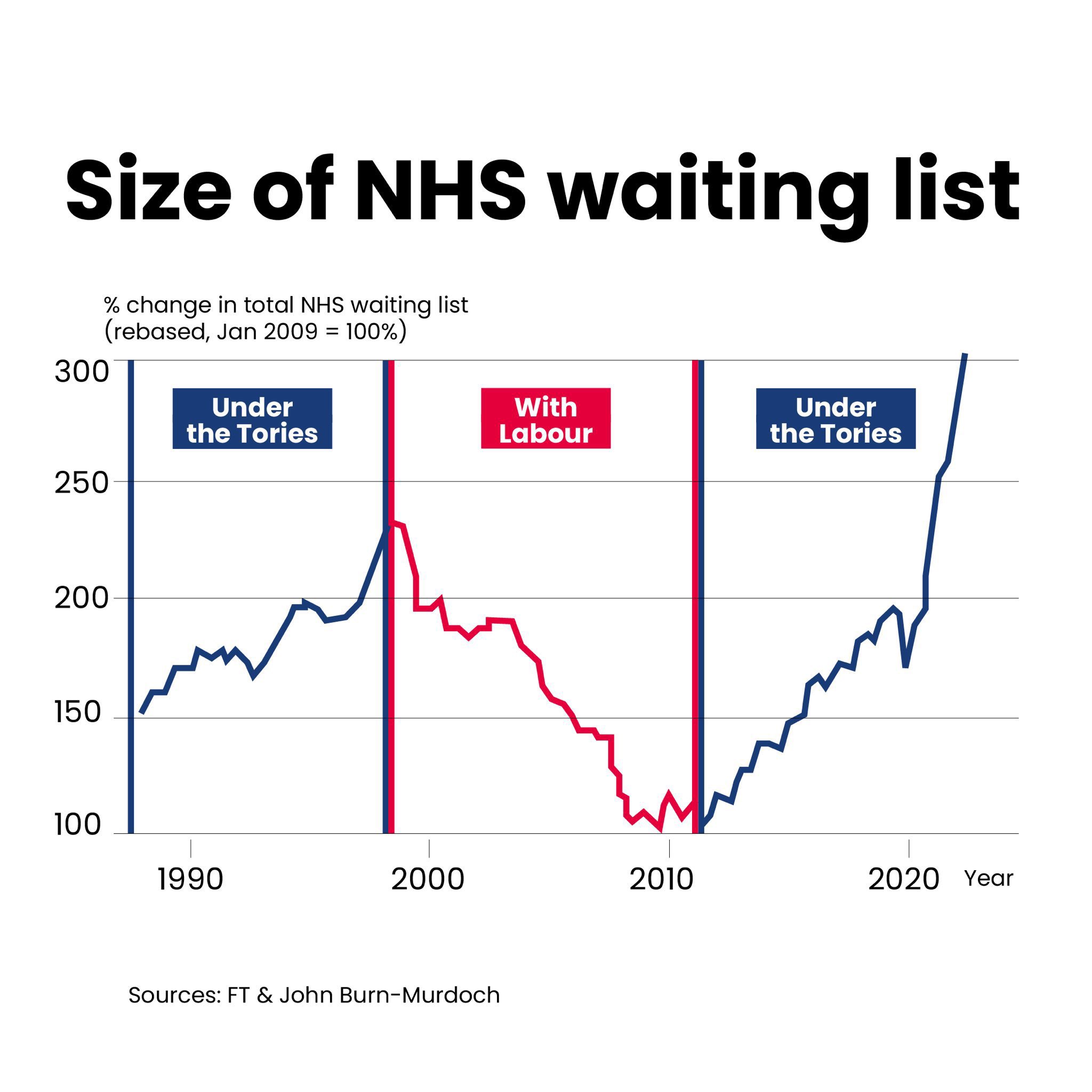
Recently, thanks to an assassination/murder, the issues about US healthcare have been in the news again.  Before 2010, I could boast that the NHS was so much better than the US system.  Thanks to fourteen years of the Conservative's running it into the ground, I cannot be as proud of it as I would like.  But, it still is more equitable than the US system and you do not see people trying to assassinate Wes Streeting over it. 


Obama had wanted to make things much better, but US politics diluted the reforms that he wanted.  One thing that would have worked was the mandate to obtain insurance, but that was removed and the US healthcare system did not improve the way it was meant to.  The mandate was actually the idea of Hilary Clinton, but it made so much sense, Obama changed his mind on it and took it on with his proposed plan.  It has worked in many nations to ensure that insurance coverage is universal and affordable.  But since the GOP got rid of the mandate, costs have risen as hospitals have to pay for the increasing numbers of Americans who are not covered by insurance. 

So when the United Healthcare CEO is murdered over the issues with US healthcare, he is not at fault for the system.  The fault with the system lies with the politicians who ruined Obamacare. 


As seen in The Rainmaker and the series, Breaking Bad, there are advantages to universal healthcare which the US misses out on... 


Friday, 23 October 2020

Kimmel on US healthcare


Jimmy Kimmel has decided to talk about healthcare in the USA.  The issue has come up in the US presidential debate and allegations have been made by both sides,  I can understand his concerns about this matter considering what has happened with his son.  Thankfully he has had the money to fund the healthcare that is needed, but under the US system, it means that he has been born with a pre-existing condition.  He has spoken to politicians about this before as he (like me) feels it is unfair that others who have less money would not be covered if pre-existing conditions are not covered.


In my job, I have some dealings with private healthcare, and I have it as well.  I have seen how pre-existing conditions are not covered and how insurance companies try to avoid paying out (not an issue with me when I had to use it).  So far, that has not been to the levels seen in The Rainmaker, but I have had to word referrals to make it easier for people to be covered at times.  But here, when someone is not covered, we still have the NHS.  


The Affordable Healthcare Act has meant that people are covered in the USA and while I understand that the GOP want to ensure that Americans are covered for pre-existing conditions, I do not understand why they wish to remove cover before they reinstate it with a bill that no one has seen.  A cynic would say they want to return to the situation before the ACA, but I am sure that they would not do that... 


Monday, 13 April 2020

Did Trump underestimate the significance of COVID-19?


I do think that people are keen to blame Trump for lots of things.  And I think it is wrong of the media to report on unsubstantiated rumours all the time when it comes to Trump.

The main reason for this, is that there is so much of what Trump says, and how his administration acts that needs to be focused on.

A big example is how his administration has endangered the USA.

After Ebola threatened the world, the pandemic office in the USA was reorganised.  Trump has pointed out that he did not close it, but it did change on his watch.  Despite how important it was when it came to Ebola, there was no one in charge at the White House to respond to the COVID pandemic, unlike what happened when the USA faced Ebola and Swine Flu.

The next point is how the Trump appeared to publicly downplay the threat that COVID-19 posed to the world.  While those who support Trump state that the WHO had reported on the 14th of January, that there was no clear evidence of human to human transmission, many are unaware that the WHO stated on the 23rd of January

WHO assesses the risk of this event to be very high in China, high at the regional level and high at the global level.

This message, contained in the World Health Organization Novel Coronavirus (2019-nCoV) SITUATION REPORT - 3 and the date is very important. Mainly because Trump has claimed that the WHO got it wrong.

Many may argue that Trump took action by closing the borders to China on the 31st of January, but by then, the virus had spread beyond the Chinese borders.  There is no doubt that the US government was taking action, but it did not seem to be close to enough, an example being the restrictions on social distancing.

People need good leadership in times like this.  Someone who says that the virus is a hoax and will be gone is not someone who is preparing the pubic to the actions that are needed to reduce the speed at which this virus spreads.

It is unfair to blame Trump for all the deaths in the USA due to COVID-19.  No matter who had been in charge there would be issues with the numbers of ventilators that the US needs. But a quicker, more decisive and consistent approach and message would have helped to flatten the curve in New York, along with the other areas where the healthcare systems are being overwhelmed.

Saturday, 28 March 2020

Covidiots.


It will be interesting to see if Trump is able to avoid the blame for how COVID19 is to kill many Americans.  It would have killed many, but action taken by him would have bought time for more preparations to be made, and therefore for lives to have been saved, not just of the general public, but of those who are treating those infected.  Remember that after Ebola caused a more major issue because it spread to the west in 2014, the office used to co-ordinate responses to such issues was closed!

Here in the UK, we have an issue where there are concerns about the levels of PPE (personal protective equipment) which are available in the community, let alone, what is present in hospitals.  In addition to this, like all nations, the UK faces a shortage of ventilators, but unlike many others, missed out on the chance to get more.  What makes my blood boil, is that NHS staff would have better protection but Jeremy Hunt decided that we were not worth it.  While there are arguments that the preparation of the UK could and should have been better, there is no doubt that the NHS would have been in a better place to deal with things if not for the way it has been treated up until now.

What I find amazing though is the way that people appear to be denying the reality that is taking place in Iran, Italy and Spain.  Social distancing will save lives, and sadly, the economies of most of our nations will need to be stagnant for a while.  China will recover from this, but the concern there is for how long.  They are to enter a state of isolation and I suspect that they will hope that a vaccine or an effective treatment is found before it recurs there.  What I hope is that China will be able to help save the world.  If they are able to keep COVID19 from returning, they could be the force that allows the world to have more ventilators and more PPE.
Anyway, I am hoping that the testing that has been approved for NHS staff will allow me to return to work soon.  So long as the testing is found to be accurate.

It will be interesting to watch a disaster film in the future. Even now, we will be able to watch some and think "That is Trump" or "That person is just like a Trump supporter denying the effects of COVID."  And as you can see from the video, being a moron is not just confined to the young.

Thursday, 12 March 2020

Donald Trump has made an excellent political move, that will have no health benefits. A travel ban will not work.


I have woken up to find that Donald Trump has increased the travel ban due to COVID19.  Well, bits of one, this being a ban on travel from nations who are in the Schengen Agreement area.  

This move will have much more of an effect on how the American public view him, but little on this disease.  COVID19 is already in the USA and the rates are probably greater than have been tested considering the way the USA has not been able to test as many people as has happened in EuropeOf course, Trump has decided to blame Obama for this.  But while he wanted to cut funds to the CDC which is responsible for managing the response to this in the USA, despite Ebola, it is uncertain if these cuts have taken effect.  

But travel bans do not work.  People in the UK had called for a travel ban when this started to stop people coming in from China.  But our first national to have it, contracted it in Singapore and brought it to the UK via FranceThere is only one nation to have imposed more strict bans on travel due to COVID, this being North Korea, and this has not worked there to prevent it entering the nation, though it is unclear if they will be able to limit any spread or not with the measures that they have put in place.  And when it comes to this new travel ban, people in the Schengen Agreement area will find ways to get around this by travelling to other destinations, including the UK before flying to the US.

To put it simply, the travel ban that Trump has imposed is unlikely to do much to prevent the spread of COVID19, but it will appeal to many voters, even though it makes little sense. 

Monday, 9 March 2020

Are people panicking over nothing when it comes to COVID19


The simple answer is yes and no.

Yes, people appear to be panicking over toilet roll and dried pasta in the UK when they should not be.  On Saturday, when we visited my mother we were not able to get into Costco as people were stocking up there.  Saying that, stocking up now means that there will still be supplies when COVID19 hits the UK properly.

And sadly, it will.  At the moment, the strategy of containment is working to delay the spread of this virus as much as reasonably possible.  But it will spread.  The number of confirmed cases appears to be doubling every day and the NHS is doing the best it can to cope with this.

The government is listening to it when it comes to preparing for this, and the NHS will do the best it can to cope.  But I do not think any healthcare system in temperate zones will be able to cope with this, until summer hits.  While the NHS was better prepared when it faced Swine Flu in terms of finances and staffing levels, this illness is more fatal.

And this is where some people are being complacent on the internet.  Yes, flu kills.  Yes, Swine Flu did not kill as many as expected (thanks to immunisation and the use of the drugs that are available).  But there is no vaccine against COVID19 and only one drug appears to have any potential against this.  The death rate may not be as high as the 3% reported in some newspapers, and we have South Korea to thank for this information as they have been screening lots of people for COVID19, not just those with symptoms.

But this is more fatal, and this has been noted by the deaths of those in China who have been treating patients with this condition.

And working in healthcare, yes, I am worried that I will join that listBut I am more concerned about how this will affect my wife.  My kids hopefully should not be affected by it too much.

On the bright side, at least I am not in the USA where I would be landed with a huge bill if I am concerned that I have this.

Monday, 2 March 2020

US healthcare again


I know that things have changed since Obamacare in the USA and that Trump has been trying to improve things further by cutting back on the healthcare that Americans get.

And while I do rant about the NHS and how much better it can (and should) be, I am very grateful that we still have it for now.

So if I come across as being cynical, it is only because the NHS was better before 2010 than it is now in so many ways and I am frustrated that the policies of the Conservatives have made things worse when it comes to how it performs.


Saturday, 18 August 2018

Ocean's 8 as well as Love and Other Drugs

My wife and I had some time away from the kids as we travelled into London to have a meal together.

We went shopping at first, nothing too fancy, but my wife bought something simple and flattering to wear.  We had a sit down in the M&S cafe on the outside terrace and then made our way to the restaurant. Ember Yard is near where my wife and I went to one of our first dates, a location I almost remember as it was the first time that I had eaten meat in a year (it was chicken kiev, though the actual restaurant has since closed down).  My wife had arranged for us to go there and I have to admit that I was not too keen on this at first, as having had Tapas in the past, I was not a big fan.  I was very wrong.

The service was a bit frosty at first, though it was attentive and could not be faulted.  But it became warmer.  The food however was outstanding.  It had a good selection of beer and my wife loved the cocktails, but the food was amazing.  While I have had some excellent meals recently, this was the best of the best for at least a few months, with nothing as good as this eaten since we ate at Grain, and possibly before then.

After this, we watched a film, Ocean's 8.  My wife liked it more than I did.  I did like it, but it lacked the character development of Ocean's Eleven.  Also, as enjoyable as it was, there were a few loose ends, such as why the insurance company settled for part of the haul, and the morality of planting the decoy. I am glad I watched it, and it is hard for any film to follow Ocean's Eleven.

Anyway, now everyone else is in bed and I am watching Love and Other Drugs while they sleep.  While it is a very amusing film, it is also very sad.  But any film dealing with Parkinsonism is going to be so.  Rude and certainly not suitable for children (they observed a few things in it and my son is now asking awkward questions).  Ocean's 8 is an okay film, Love and Other Drugs is better.  It was a bit disjointed at times, but I was watching a television version of the film.  And as enjoyable as the film was, it reminded me just how lucky we are in the UK to have the NHS (despite the faults that it has due to the way the Conservatives have not funded or staffed it properly) and it amazes me that the Americans continue to have the healthcare system that the have, and fight for it.  We do not see bus loads of pensioners travelling across borders for medicines.  Well, we may do after Brexit, but that is a different matter!

And now for some pictures from our meal...

Tuesday, 15 October 2013

America was not shut down properly. Would you like to start America in safe mode, with free healthcare & without the guns? (Recommended)


As some of you know I am in favour of the reforms that the right in the USA are trying so hard to prevent from helping America.And as so many people know, the right have several alternative suggestions, none of which have ever been shown to have worked elsewhere. And the reforms Obama wants for America have already been proven to work...

Sunday, 25 August 2013

Monday, 12 November 2012

"And I would have gotten away with it too if it weren't for you meddling minorities, women and gays!" - Mitt Romney

Apparently Mrs Romney is overjoyed at Obama's victory, as now she won't have to move into a smaller house.

David Cameron: "I look forward to working with Barack Obama for the next four years."
Two years, Dave, two years.

"It doesn't matter if you're Black or White, Hispanic or Asian, Gay or Straight young or Old..."
Obama's turned into Michael Jackson.

After spending over a billion dollars to get reelected, I wonder if Obama will get the Nobel Prize for economics this term.

Mixed messages from two black role models last week.
After a long battle against millionaire Mitt Romney and the racism of America, a victorious Barack Obama stood tall.
After a little tug on his shirt, Mario Balotelli fell over.

How could I note make a post about the election victory? I did mean to post it last week, but to be fair, I just have not had the time. But better late than never!

Sunday, 28 August 2011

10 Surprising Facts about American Health Care

This post is a response to a post by Scott Atlas about US healthcare.  He raises ten interesting points.  I am going to deal with many of the posts he refers to.  After the reference section, I will also mention a few other things that this does not deal with.

Fact No. 1:  Americans have better survival rates than Europeans for common cancers.[1]  Breast cancer mortality is 52 percent higher in Germany than in the United States, and 88 percent higher in the United Kingdom.  Prostate cancer mortality is 604 percent higher in the U.K. and 457 percent higher in Norway.  The mortality rate for colorectal cancer among British men and women is about 40 percent higher.
This fact forgets two things.  The uninsured in the USA have worse survival rates than those with insurance, and this fact does not mention those cancers that have similar survival rates.
Fact No. 2:  Americans have lower cancer mortality rates than Canadians.[2]  Breast cancer mortality is 9 percent higher, prostate cancer is 184 percent higher and colon cancer mortality among men is about 10 percent higher than in the United States.
As noted above, look at the rates for those who can not affor insurance. 
Fact No. 3:  Americans have better access to treatment for chronic diseases than patients in other developed countries.[3]  Some 56 percent of Americans who could benefit are taking statins, which reduce cholesterol and protect against heart disease.  By comparison, of those patients who could benefit from these drugs, only 36 percent of the Dutch, 29 percent of the Swiss, 26 percent of Germans, 23 percent of Britons and 17 percent of Italians receive them.
Now this is a fascinating fact.  Mainly because when you look at the complication rates for chronic illnesses, the USA actually is worse than other developed nations.  In addition to this (and these are facts I will repeat) the US scores worst amongst developed nations when it comes to deaths due to preventable causes
 Fact No. 4:  Americans have better access to preventive cancer screening than Canadians.[4]  Take the proportion of the appropriate-age population groups who have received recommended tests for breast, cervical, prostate and colon cancer:
  • Nine of 10 middle-aged American women (89 percent) have had a mammogram, compared to less than three-fourths of Canadians (72 percent).
  • Nearly all American women (96 percent) have had a pap smear, compared to less than 90 percent of Canadians.
  • More than half of American men (54 percent) have had a PSA test, compared to less than 1 in 6 Canadians (16 percent).
  • Nearly one-third of Americans (30 percent) have had a colonoscopy, compared with less than 1 in 20 Canadians (5 percent).
Fact No. 5:  Lower income Americans are in better health than comparable Canadians.  Twice as many American seniors with below-median incomes self-report "excellent" health compared to Canadian seniors (11.7 percent versus 5.8 percent).  Conversely, white Canadian young adults with below-median incomes are 20 percent more likely than lower income Americans to describe their health as "fair or poor."[5]
This 'fact' refers to health perception, not to actual health.  Again, look at the survival rates of lower income Americans compared to the survival rates of those in other developed nations
Fact No. 6:  Americans spend less time waiting for care than patients in Canada and the U.K.  Canadian and British patients wait about twice as long - sometimes more than a year - to see a specialist, to have elective surgery like hip replacements or to get radiation treatment for cancer.[6]  All told, 827,429 people are waiting for some type of procedure in Canada.[7]  In England, nearly 1.8 million people are waiting for a hospital admission or outpatient treatment.[8]
But this does not look at those Americans who never get a chance to wait due to lack of insurance!
Fact No. 7:  People in countries with more government control of health care are highly dissatisfied and believe reform is needed.   More than 70 percent of German, Canadian, Australian, New Zealand and British adults say their health system needs either "fundamental change" or "complete rebuilding."[9]
Which is why people in those nations keep those systems!  When the conservatives in the UK took power, that was on a promise to protect the NHS!  Let alone the fact that people in the UK love the NHS. 
Fact No. 8:  Americans are more satisfied with the care they receive than Canadians.  When asked about their own health care instead of the "health care system," more than half of Americans (51.3 percent) are very satisfied with their health care services, compared to only 41.5 percent of Canadians; a lower proportion of Americans are dissatisfied (6.8 percent) than Canadians (8.5 percent).[10]
Which is why Obama was elected on a platform to reform the healthcare system...
Fact No. 9:  Americans have much better access to important new technologies like medical imaging than patients in Canada or the U.K.  Maligned as a waste by economists and policymakers naïve to actual medical practice, an overwhelming majority of leading American physicians identified computerized tomography (CT) and magnetic resonance imaging (MRI) as the most important medical innovations for improving patient care during the previous decade.[11]  The United States has 34 CT scanners per million Americans, compared to 12 in Canada and eight in Britain.  The United States has nearly 27 MRI machines per million compared to about 6 per million in Canada and Britain.[12] 
And yet as mentioned, people in the UK are healthier and do better on most chronic conditions when it comes to complication rates than they do in the USA, as well as those who die of preventable causes of death in the USA compared to other developed nations.
Fact No. 10:  Americans are responsible for the vast majority of all health care innovations.[13]  The top five U.S. hospitals conduct more clinical trials than all the hospitals in any other single developed country.[14]  Since the mid-1970s, the Nobel Prize in medicine or physiology has gone to American residents more often than recipients from all other countries combined.[15]  In only five of the past 34 years did a scientist living in America not win or share in the prize.   Most important recent medical innovations were developed in the United States.[16]
And yet the system fails Americans.  Again look at the health of Americans compared to people in the UK and again look at the complication rates for medical conditions which in general is worse in the USA.

[1] Concord Working Group, "Cancer survival in five continents: a worldwide population-based study,.S. abe at  responsible for theountries, in s chnologies, " Lancet Oncology, Vol. 9, No. 8, August 2008, pages 730 - 756; Arduino Verdecchia et al., "Recent Cancer Survival in Europe: A 2000-02 Period Analysis of EUROCARE-4 Data," Lancet Oncology, Vol. 8, No. 9, September 2007, pages 784 - 796.
[2] U.S. Cancer Statistics, National Program of Cancer Registries, U.S. Centers for Disease Control; Canadian Cancer Society/National Cancer Institute of Canada; also see June O'Neill and Dave M. O'Neill, "Health Status, Health Care and Inequality: Canada vs. the U.S.," National Bureau of Economic Research, Working Paper No. 13429, September 2007.  Available at http://www.nber.org/papers/w13429.
[3] Oliver Schoffski (University of Erlangen-Nuremberg), "Diffusion of Medicines in Europe," European Federation of Pharmaceutical Industries and Associations, 2002.  Available at http://www.amchampc.org/showFile.asp?FID=126.  See also Michael Tanner, "The Grass is Not Always Greener: A Look at National Health Care Systems around the World," Cato Institute, Policy Analysis No. 613, March 18, 2008.  Available at http://www.cato.org/pub_display.php?pub_id=9272.
[4] June O'Neill and Dave M. O'Neill, "Health Status, Health Care and Inequality: Canada vs. the U.S."
[5] Ibid.
[6] Nadeem Esmail, Michael A. Walker with Margaret Bank, "Waiting Your Turn, (17th edition) Hospital Waiting Lists In Canada," Fraser Institute, Critical Issues Bulletin 2007, Studies in Health Care Policy, August 2008; Nadeem Esmail and Dominika Wrona "Medical Technology in Canada," Fraser Institute, August 21, 2008 ; Sharon Willcox et al., "Measuring and Reducing Waiting Times: A Cross-National Comparison Of Strategies," Health Affairs, Vol. 26, No. 4, July/August 2007, pages 1,078-87; June O'Neill and Dave M. O'Neill, "Health Status, Health Care and Inequality: Canada vs. the U.S."; M.V. Williams et al., "Radiotherapy Dose Fractionation, Access and Waiting Times in the Countries of the U.K.. in 2005," Royal College of Radiologists, Clinical Oncology, Vol. 19, No. 5, June 2007, pages 273-286.
[7] Nadeem Esmail and Michael A. Walker with Margaret Bank, "Waiting Your Turn 17th Edition: Hospital Waiting Lists In Canada 2007."
[8] "Hospital Waiting Times and List Statistics," Department of Health, England.  Available at http://www.dh.gov.uk/en/Publicationsandstatistics/Statistics/Performancedataandstatistics/HospitalWaitingTimesandListStatistics/index.htm?IdcService=GET_FILE&dID=186979&Rendition=Web.
[9] Cathy Schoen et al., "Toward Higher-Performance Health Systems: Adults' Health Care Experiences In Seven Countries, 2007," Health Affairs, Web Exclusive, Vol. 26, No. 6, October 31, 2007, pages w717-w734.  Available at http://content.healthaffairs.org/cgi/reprint/26/6/w717.
[10] June O'Neill and Dave M. O'Neill, "Health Status, Health Care and Inequality: Canada vs. the U.S."
[11] Victor R. Fuchs and Harold C. Sox Jr., "Physicians' Views of the Relative Importance of 30 Medical Innovations," Health Affairs, Vol. 20, No. 5, September /October 2001, pages 30-42.  Available at http://content.healthaffairs.org/cgi/reprint/20/5/30.pdf.
[12] OECD Health Data 2008, Organization for Economic Cooperation and Development.  Available at http://www.oecd.org/document/30/0,3343,en_2649_34631_12968734_1_1_1_37407,00.html.
[13] "The U.S. Health Care System as an Engine of Innovation," Economic Report of the President (Washington, D.C.: Government Printing Office, 2004), 108th Congress, 2nd Session H. Doc. 108-145, February 2004, Chapter 10, pages 190-193, available at http://www.gpoaccess.gov/usbudget/fy05/pdf/2004_erp.pdf; Tyler Cowen, New York Times, Oct. 5, 2006; Tom Coburn, Joseph Antos and Grace-Marie Turner, "Competition: A Prescription for Health Care Transformation," Heritage Foundation, Lecture No. 1030, April 2007; Thomas Boehm, "How can we explain the American dominance in biomedical research and development?" Journal of Medical Marketing, Vol. 5, No. 2, 2005, pages 158-66, U.S. Department of Health and Human Services, July 2002.  Available at http://fraser.stlouisfed.org/publications/erp/page/8649/download/47455/8649_ERP.pdf .
[14] Nicholas D. Kristof, "Franklin Delano Obama," New York Times, February 28, 2009.  Available at http://www.nytimes.com/2009/03/01/opinion/01Kristof.html.
[15] The Nobel Prize Internet Archive.  Available at http://almaz.com/nobel/medicine/medicine.html.
[16] "The U.S. Health Care System as an Engine of Innovation," 2004 Economic Report of the President.


Why does no other developed nation have the old US model of healthcare?  Because in the US model, before the reforms, insurance companies used death panels to deny care to those they were meant to cover.  And then they raised costs.  Not only does the USA spend more on healthcare than any other nation, it finds itself bottom of the table when it comes to preventable deaths due to treatable conditions when it comes to developed nations.  The sad thing is that rather than focus on these things, the right spreads lies and half truths about the reforms and howhealthcare works abroad.  Even sadder is the fact that the reforms are so simple.  But I think the saddest things are the number of kids in America who die.  I do not like the issue that in the UK, we have a high death rate of kids aged under five compared to other nations, but the USA, the most developed nation in the world have an even higher death rate for kids aged under five.  And in addition to that, look at the maternal mortality rate for the USA.  In English it means the number of women who die when they are pregnant (or soon after) which are due to problems related to the pregnancyIt is higher in the USA than it is in other developed nations.

I do not know which facts you will find of more interest.  But please do click on at least a few of the links that I have provided which back up my statements.   


Sunday, 1 May 2011

The NHS, the truth

As some of you know, I am active on Yahoo Answers.  I started to post there as I saw some outright lies, as well as half truths being told by members and supporters of the BNP.  Well one of the other things I noted, was the debate on healthcare in the USA.  I saw some terrible things being said about healthcare in the UK, and of course, working in the NHS, I could not let such things go without being challenged.

Well, now, there are a few posters who are regurgitating the same facts.  And to be fair, some are right, but loads are blatant distortions.  So this post is dedicated to pointing out the truth with these statements.


Question a doctor and lose your child - This article in the Times is one on child protection.  In the vast majority of cases, parents know better than doctors when it comes to their children.  I am a parent after all and we in the health professions respect that.  But there are cases there parents do not know.  And in cases, where a child is at risk of harm or abuse, then we as healthcare workers have to act in the best interests of the child.  The many cases where such actions help children is not reported in the news, but the very few stories where healthcare workers get it wrong, or where it makes good headlines do.

'Doctors told me it was against the rules to save my premature baby' - this article (in a paper known to have supported Hitler in the past) refers to a baby born at a gestation of 21 weeks and five days.  The youngest child to have survived was born at 21 weeks and six days, that being a very rare occurence.  Yes, there are guidelines by the UK that state that resuscitation should not be carried out on babies born before 22 weeks but the thing that makes it even more interesting, is that these posts made by Americans make no mention that in the USA, babies born before 23 weeks are considered non-viable!  

Daughter claims father wrongly placed on controversial NHS end of life scheme - This refers to a claim, not a fact and the Liverpool Care Pathway which it refers to is not controversial really.  Yes, like with all things, there are people who disagree with it, but then there are those who think that the earth is flat.  Is it controversial to say it is round, or that the sun is a ball of hydrogen within which nuclear fusion is taking place?  Some would say such statements are completely wrong!

NHS is paying millions to gag whistleblowers - I am not going to claim that some authorities do the best they can to hide things, but the NHS as a whole encourages people to speak up in order to help patient care.  Those from abroad forget that, or never bothered to listen when told otherwise.  Or never knew about it and did not find out more.

Patients forced to live in agony after NHS refuses to pay for painkilling injections - an interesting headline.  But if you look at the article, "A spokesman for NICE said its guidance did not recommend that injections were stopped for all patients, but only for those who had been in pain for less than a year, where the cause was not known."  Something that our American cousins seem to miss when they quote this on Yahoo! Answers.

People in the UK face longer waits for non-emergency surgery and struggle to see GPs out-of-hours compared with other western countries, a survey says -  again an interesting article, because in the comparisons, the US fails big time.  But the BBC link while it reports some of the findings in the Commonwealth Fund article, does not mention those that US posters fail to realise!  These of course refer to medical error rates and those who skip healthcare due to costs.  Click on the link above if you want more on that story!

Britain's healthcare system 'worse than Estonia's' is another headline article that has been quoted.  However, when it was posted, the person who used this to bash the NHS neglected to mention that this was when it came to patient satisfaction and neglects to mention that when it came to "access" and "efficiency" that the NHS scored much, much better.   

Others in the USA have posted how the NHS is to be reformed.  And yes it is.  But it is still to be a service that is funded through the government that is free at the point of delivery. The reforms are controversial, with not everyone being in favour of them.  And the reforms are only taking place in England, not in the other areas of the UK.

Now, the fire service in the USA can be run like the healthcare system has been run under the rule of the GOP.

And the video does show how that would work!

There is the statement dealing the the death rates for unhealthy teenage girls which is high in the UK.  But not as high as that in the USA.  The article quite rightly mentions that the UK has high death rates for boys and girls, the chance of them living till 60 being high, but not high enough.  But the people who quote it forget the rates for the USA!

Another article states "Die in Britain, survive in the US" using figures that date back to 1996!  The same article, written by someone who is plugging his book mentions the US healthcare system, as well as it's failures, but fails to mention the latest facts on the management of chronic conditionsA fact ignored in this article which looks at UK cancer survival rates, again quoted against the NHS.  In them, the USA rates better than the UK in just one of the outcomes.  In all the others, the UK beats the USA.  So, yes, there are some areas where you do better if you live in the USA than if you live in the UK.  But there are so many other ways in which having access to the NHS gives you better outcomes.  And you do not have to become bankrupt to do so.


And of course, there are these facts...


FACT - Insurance companies in the USA admit to pushing up prices, buying politicians and not paying out claims when they should
FACT - PER PERSON the USA spends more on healthcare than any other nation on the planet
FACT - Obama debated his plans before the election for healthcare
FACT - the chance of a child under five of dying in the USA is greater than industrialised nations with universal healthcoverage
FACT - Obama was elected by the American people to bring in change
FACT - Obama wants to stop insurance companies from screwing the American people
FACT - The reforms Obama wants work in the Netherlands and in Switzerland

Sorry of this causes offence to some.  That is not the intent and I am always open to debate.  If you want to debate, feel free to e-mail me using Yahoo! Answers, or if you want, you can post comments here.  If you want to post abuse, or a negative comment, I am more than happy to publish those posts as well. 

But, remember, rationing occurs in all healthcare systems.  It is up to the people of a nation to decide if they want that based on health related factors, or on the ability to pay. 


Saturday, 30 April 2011

Why we love the NHS

This is from a UNISON Factsheet specially prepared for sister unions in the USA and was produced by UNISON to counter the lies and half truths that the right in the USA produce about the NHS in the UK.  I hope UNISON do not mind me posting it here, even though it is a bit out of date, dating back to Augst 2009.

The UK’s National Health Service provides a comprehensive range of services that is free at the point of need and accessible to all. It provides peace of mind to millions, regardless of their income or employment circumstances.
The NHS has come under attack from right-wing critics of President Obama’s health plans. Some of these claims, such as those that patients over a certain age cannot receive treatment for brain tumours or heart bypasses, are simply untrue – there are no such bans and nor have there ever been.
Various rogue British commentators, such as Daniel Hannani and Karol Sikoraii, are trying to portray the NHS as dysfunctional or describing it as a “60 year mistake”. However, as the facts and figures below demonstrate, nothing could be further from the truth.
Is the NHS an efficient system?
- OECD figures show that UK total health expenditure as a percentage of GDP (8.4%) is actually below the OECD average and a long way below that of the USA, which has easily the most expensive system at 16%, nearly double UK spending.iii
- The UK spend per head of population is $2,992 as opposed to $7,290 in the USA.iv
- The UK NHS is largely free of the huge transaction costs associated with revenue collection and marketing that blight other systems, such as the USA.v As a result, the cost of administration in the UK is estimated at around 12% compared to more than 30% in the USA.vi
- The UK spends 3% of its budget on management costs, as opposed to 17% in the USA.vii
- The NHS has not been complacent or uncritically carried on as normal; a major review at the start of this decade evaluated different healthcare funding options and concluded that the current method of NHS funding through general taxation was both the fairest and most efficient one.viii
- Productivity in the NHS has been rising alongside recent extra funding, for example by 0.7 per cent in 2006 and by 1.2 per cent in 2007.ix
What are the waiting times for treatment on the NHS?
- From January 2009, no one in England waits more than 18 weeks from the time they are referred to the start of their treatment.x Most importantly, the average wait for treatment is much shorter, at just 8 weeks. And median waiting times are just over 2 weeks for outpatients and 4 weeks for inpatients.xi
- For cancer patients, 99.7% of patients are seen within 2 weeks from urgent GP referral to outpatient appointment. For breast cancer, 99.8 % of patients are treated within 1 month from diagnosis to treatment. xii
- Virtually all patients are treated within four hours at Accident & Emergency units in hospitals.xiii
How is the NHS performing?
- Claims that clinical outcomes in the NHS are lagging behind other countries, particularly the USA, are wide of the mark.
- For example, the UK outperforms the USA where mortality rates from lung cancers are concerned.xiv
- Likewise, UK mortality rates from heart disease and stroke are considerably better than the USA.xv
- And in terms of in-hospital recovery from stroke, the UK is ranked second only to Japan amongst the OECD countries.xvi
How does the UK system compare to others?
- In comparison with the healthcare systems of five other comparable countries (Australia, Canada, Germany, New Zealand and the USA) the NHS was found to be the most impressive overall by the New York-based Commonwealth Fund in 2007 (the USA came last). Specifically the NHS was rated as the best system in terms of quality of care, co-ordination of care, and equity, but also, crucially, in terms of the efficiency of care.xvii
- The last time the World Health Organization produced a ranking of the world’s health systems, the UK was ranked considerably higher than the USA.xviii
- Life expectancy at birth is greater in the UK than in the USA and the infant mortality rate is lower in the UK than in the USA.xix
What is NICE?
- Far from being a “death panel”, the National Institute for healthcare and Clinical Excellence (NICE) is a world-renowned body that evaluates the effectiveness of drugs for use in the UK health system.
- NICE does not put a limit on the amount the NHS can spend on an individual patient.
- Its evaluation process involves top medical experts working alongside members of the public and many other health systems in the world are now looking to duplicate its approach to drug evaluation.
- NICE rejects only a tiny percentage of all the drugs it assesses for use on the NHS (around 5 per cent) and since 1999 has recommended over 90 per cent of the cancer drugs it has been asked to look at.xx
What do patients think of their NHS?
- The NHS remains a defining feature of life in the UK, consistently rated as more popular than the Royal Family or Parliament.
- The NHS regulator’s latest patient survey recorded 92% of patients saying their care was “good”, “very good” or “excellent”.xxi
- According to the 2009 British Social Attitudes report, satisfaction with the NHS is at its highest level for 25 years. And those with personal experience of the NHS rate it highest of all.xxii
What do people say about the NHS?
- Professor Stephen Hawking: “I wouldn’t be here today if it were not for the NHS. I have received a large amount of high-quality treatment without which I would not have survived”.
- Explorer Sir Ranulph Fiennes: "I love the NHS because they saved me from certain death following a massive heart attack. Also, when my wife of 36 years was terminally ill with cancer the NHS looked after her diligently and with expertise and patience".
- Prime Minister Gordon Brown: “The NHS makes the difference between pain and comfort, life and death”.
- UNISON General Secretary Dave Prentis: “Regardless of your income, the NHS provides peace of mind even at the most uncertain economic times, like those we're experiencing now. In the US, losing your job means losing your health insurance”.
About UNISON
UNISON is a powerful voice for working people in the United Kingdom. We have over 1.3 million members working in public services, the community and voluntary sector and for private companies.
UNISON is the UK's largest healthcare trade union – representing 400,000 nurses, student nurses, midwives, health visitors, healthcare assistants, paramedics, cleaners, porters, catering staff, medical secretaries, clerical and admin staff and scientific and technical staff.
UNISON campaigns for quality public services as the foundation of a strong economy and a fair society. Add your voice to ours at http://www.unison.org.uk/million

i Daniel Hannan is a Conservative Party Member of the European Parliament for SE England.
ii Dr Karol Sikora is a founder member of the UK think tank Doctors for Reform.
iii OECD Health Data 2009, http://www.oecd.org/dataoecd/46/4/38980557.pdf
iv OECD Health Date 2009, http://www.oecd.org/dataoecd/46/4/38980557.pdf
v See for example, “Competition in a publicly funded healthcare system”, S Woolhandler, D Himmelstein, British Medical Journal, 2007, http://www.bmj.com/cgi/content/full/335/7630/1126
vi David Rowland, Allyson Pollock & Neil Vickers, “The British Labour Government's Reform of the National Health Service”, Journal of Public Health Policy, 2001. And S Woolhandler, T Campbell, D Himmelstein, “Costs of health care administration in the United States and Canada”, New England Journal of Medicine,2003, http://content.nejm.org/cgi/content/full/349/8/768
vii NHS Confederation, Key Statistics on the NHS, http://www.nhsconfed.org
viii Derek Wanless, Securing our future health: taking a long-term view, 2002,
http://www.hm-treasury.gov.uk/consult_wanless_index.htm
ix Office for National Statistics, June 2009, Total public service output and productivity, http://www.statistics.gov.uk/articles/nojournal/TotalPublicServiceFinalv5.pdf
x Department of Health, Referral to treatment statistics, http://www.dh.gov.uk/en/Publicationsandstatistics/Statistics/Performancedataandstatistics/18WeeksReferraltoTreatmentstatistics/index.htm
xi NHS Confederation, Key Statistics on the NHS, http://www.nhsconfed.org
xii Department of Health, NHS cancer waiting times, http://www.dh.gov.uk/en/Publicationsandstatistics/Publications/PublicationsStatistics/DH_091122
xiii Department of Health, Total time spent in A&E, http://www.dh.gov.uk/en/Publicationsandstatistics/Statistics/Performancedataandstatistics/AccidentandEmergency/DH_079085
xiv OECD, Health at a Glance 2007, http://www.oecd.org/health/healthataglance
xv OECD, Health at a Glance 2007, http://www.oecd.org/health/healthataglance
xvi OECD, Health at a Glance 2007, http://www.oecd.org/health/healthataglance
xvii The Commonwealth Fund, 2007, Mirror Mirror on the Wall: An International Update on the Comparative Performance of American Health Care http://www.commonwealthfund.org/Content/Publications/Fund-Reports/2007/May/Mirror--Mirror-on-the-Wall--An-International-Update-on-the-Comparative-Performance-of-American-Healt.aspx
xviii WHO, http://www.photius.com/rankings/healthranks.html
xix OECD Health Data 2009, http://www.oecd.org/dataoecd/46/4/38980557.pdf and http://www.oecd.org/dataoecd/46/2/38980580.pdf
xx Health Service Journal online, “NICE chairman hits back at critics”, Sir Michael Rawlins, 18 August 2008, http://www.hsj.co.uk/nice-chairman-hits-back-at-critics/1799765.article
xxi Adult Inpatient Survey Results 2007, published 2008, http://www.nhssurveys.org/Filestore/documents/Key_Findings_report_for_the_2007_Inpatients_Survey.pdf
xxii John Appleby and Miranda Phillips, “The NHS: satisfied now?”, British Social Attitudes: the 25th Report, 2009, http://www.natcen.ac.uk/bsa/docs/BSA-25-Report.pdf

Thursday, 15 July 2010

Lies and half truths about the NHS by the right in the USA

First of all, 15 days to go.

Second, the kids are well.  Driving my wife mad, but well.  Yesterday, she was tired, and they, sensing weakness, were full of energy.  So she took them to Go Bananas.  Which they loved.  Wednesday is normally my paper work day, but I had to go in and help out due to illness at work (others, not mine).  Which meant that I could not do the things with the kids that I would normally do to tire them out, such as take them for a walk to buy the Morning Star (while they get M&M's).  

Anyway, time to talk about why I am making this post.  As some of you know, I am active on Yahoo Answers.  I started to post there as I saw some outright lies, as well as half truths being told by members and supporters of the BNP.  Well one of the other things I noted, was the debate on healthcare in the USA.  I saw some terrible things being said about healthcare in the UK, and of course, working in the NHS, I could not let such things go without being challenged.

Well, now, there are a few posters who are regurgitating the same facts.  And to be fair, some are right, but loads are blatant distortions.  So this post is dedicated to pointing out the truth with these statements.


Question a doctor and lose your child - This article in the Times is one on child protection.  In the vast majority of cases, parents know better than doctors when it comes to their children.  I am a parent after all and we in the health professions respect that.  But there are cases there parents do not know.  And in cases, where a child is at risk of harm or abuse, then we as healthcare workers have to act in the best interests of the child.  The many cases where such actions help children is not reported in the news, but the very few stories where healthcare workers get it wrong, or where it makes good headlines do.

'Doctors told me it was against the rules to save my premature baby' - this article (in a paper known to have supported Hitler in the past) refers to a baby born at a gestation of 21 weeks and five days.  The youngest child to have survived was born at 21 weeks and six days, that being a very rare occurence.  Yes, there are guidelines by the UK that state that resuscitation should not be carried out on babies born before 22 weeks but the thing that makes it even more interesting, is that these posts made by Americans make no mention that in the USA, babies born before 23 weeks are considered non-viable!  

Daughter claims father wrongly placed on controversial NHS end of life scheme - This refers to a claim, not a fact and the Liverpool Care Pathway which it refers to is not controversial really.  Yes, like with all things, there are people who disagree with it, but then there are those who think that the earth is flat.  Is it controversial to say it is round, or that the sun is a ball of hydrogen within which nuclear fusion is taking place?  Some would say such statements are completely wrong!

NHS is paying millions to gag whistleblowers - I am not going to claim that some authorities do the best they can to hide things, but the NHS as a whole encourages people to speak up in order to help patient care.  Those from abroad forget that, or never bothered to listen when told otherwise.  Or never knew about it and did not find out more.


Patients forced to live in agony after NHS refuses to pay for painkilling injections - an interesting headline.  But if you look at the article, "A spokesman for NICE said its guidance did not recommend that injections were stopped for all patients, but only for those who had been in pain for less than a year, where the cause was not known."  Something that our American cousins seem to miss when they quote this on Yahoo! Answers.

People in the UK face longer waits for non-emergency surgery and struggle to see GPs out-of-hours compared with other western countries, a survey says -  again an interesting article, because in the comparisons, the US fails big time.  But the BBC link while it reports some of the findings in the Commonwealth Fund article, does not mention those that US posters fail to realise!  These of course refer to medical error rates and those who skip healthcare due to costs.  Click on the link above if you want more on that story!


Anyway, time for that joke...
In Norfolk, they are thinking of decreasing the VAT to 11%.


At least then they can work it out on their fingers.